
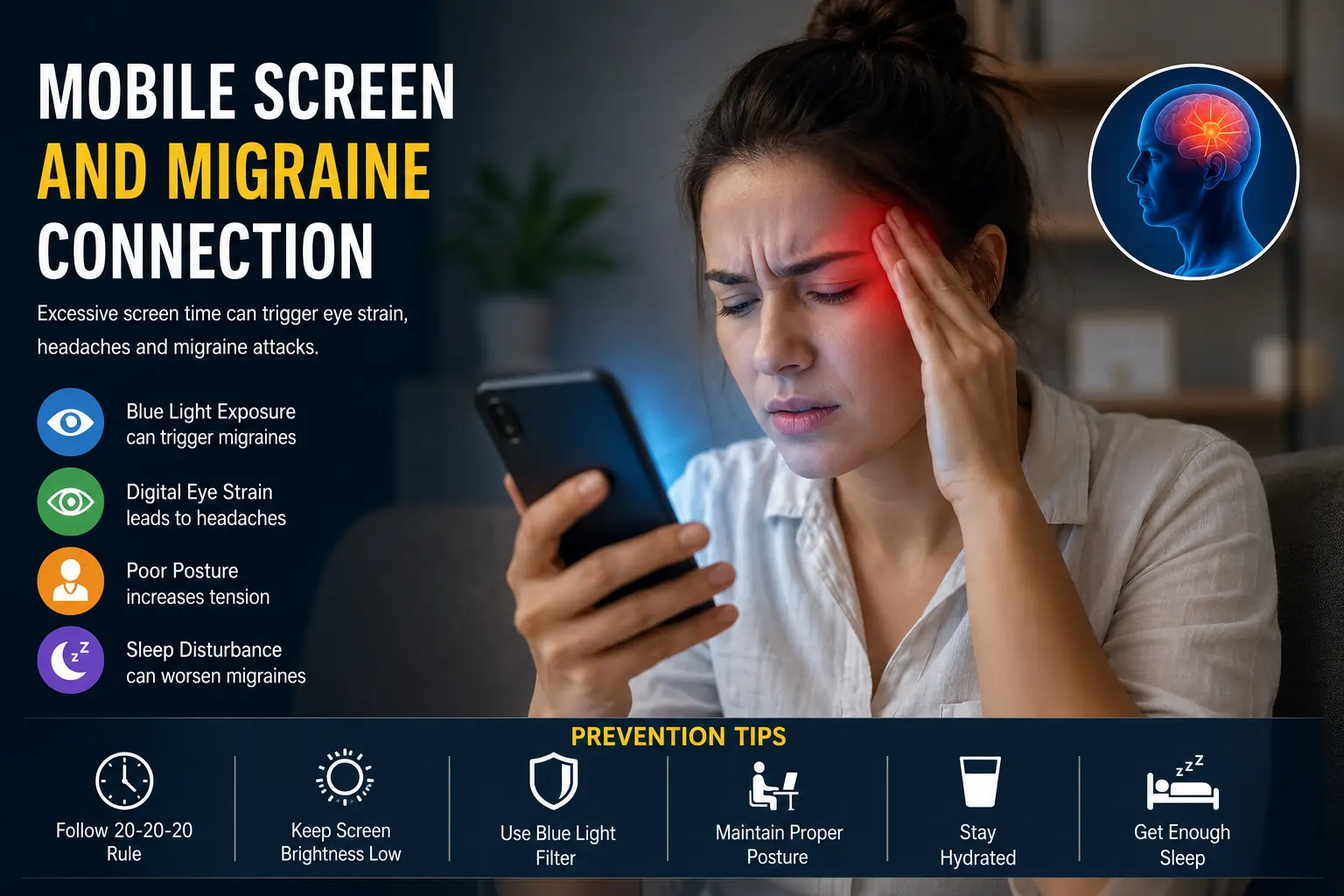
Mobile Screen and Migraine Connection: Can Excessive Screen Time Trigger Headaches?
In today’s digital world, smartphones have become an essential part of everyday life. Whether for work, social media, online learning, or entertainment, many people spend several hours looking at mobile screens every day. While smartphones offer convenience, prolonged screen exposure may contribute to headaches and migraine attacks in susceptible individuals.
Understanding the mobile screen and migraine connection can help individuals recognize triggers, reduce discomfort, and protect their brain health. Although mobile screens do not directly cause migraine in everyone, excessive screen time, blue light exposure, eye strain, poor posture, and sleep disruption may increase the likelihood of migraine episodes in people who are already prone to them.
This article explains the causes, symptoms, prevention strategies, and when to seek medical attention.
What Is a Migraine?
Migraine is more than just a headache. It is a neurological condition that can cause severe, throbbing pain, often on one side of the head. Many people also experience nausea, vomiting, and sensitivity to light, sound, or smells.
Migraine attacks can last anywhere from a few hours to several days and may significantly affect daily activities.
How Are Mobile Screens Connected to Migraine?
Although smartphones are not the direct cause of migraine, several factors associated with screen use may trigger an attack.
1. Blue Light Exposure
Mobile screens emit blue light, which may increase light sensitivity in individuals who suffer from migraines. Bright displays can overstimulate the visual system and trigger headaches.
2. Digital Eye Strain
Looking at a smartphone for long periods reduces blinking, causing dry eyes, blurred vision, and eye fatigue. This condition, known as digital eye strain, can contribute to headache development.
3. Brightness and Screen Flicker
Very bright screens or rapidly changing visual content can stimulate the brain and trigger migraine episodes in sensitive individuals.
4. Poor Posture
Many people bend their neck while using smartphones. Poor posture increases muscle tension in the neck and shoulders, which may contribute to tension headaches and migraine attacks.
5. Sleep Disturbance
Using mobile phones before bedtime suppresses melatonin production due to blue light exposure. Poor sleep is one of the most common migraine triggers.
Common Symptoms
People experiencing screen-related migraine may notice:
- Throbbing headache
- Pain on one side of the head
- Eye strain
- Blurred vision
- Sensitivity to light
- Nausea
- Dizziness
- Neck pain
- Difficulty concentrating
- Fatigue
Who Is at Higher Risk?
You may be more likely to experience migraines from screen exposure if you:
- Already have migraine disorder
- Spend more than 6–8 hours daily on digital devices
- Work in front of screens
- Sleep less than 7 hours
- Have uncorrected vision problems
- Experience high stress
- Frequently skip meals
Tips to Reduce Screen-Related Migraine
Follow the 20-20-20 Rule
Every 20 minutes, look at something 20 feet away for 20 seconds.
Reduce Screen Brightness
Keep brightness comfortable and avoid maximum brightness in dark environments.
Use Blue Light Filters
Enable Night Mode or Blue Light Filter, especially during evening hours.
Blink More Often
Blinking keeps the eyes lubricated and reduces dryness.
Maintain Proper Posture
Hold the phone at eye level and avoid bending your neck for long periods.
Take Regular Breaks
Avoid continuous screen use for several hours.
Stay Hydrated
Dehydration can trigger migraine attacks.
Get Enough Sleep
Aim for 7–9 hours of quality sleep every night.
Exercise Regularly
Physical activity helps reduce stress and improve overall neurological health.
When Should You See a Neurologist?
Seek medical attention if:
- Headaches become frequent.
- Pain is severe or worsening.
- Migraine affects daily activities.
- Headache occurs with weakness, confusion, vision loss, or speech difficulty.
- Over-the-counter medications are not helping.
Early diagnosis can help identify triggers and provide effective treatment.
Frequently Asked Questions (FAQs)
Can mobile screens directly cause migraine?
No. Mobile screens do not directly cause migraine, but prolonged screen exposure may trigger attacks in individuals who are already susceptible.
Does blue light increase migraine risk?
Blue light can worsen light sensitivity and may trigger migraine symptoms in some people.
How much screen time is considered excessive?
There is no fixed limit, but taking regular breaks and avoiding prolonged continuous screen use is recommended.
Can reducing screen time help?
Yes. Many individuals notice fewer migraine attacks after reducing screen exposure and following healthy screen habits.
Should I wear blue light glasses?
Some people find them helpful for reducing eye strain, although scientific evidence regarding migraine prevention is mixed.
Conclusion
The relationship between mobile screen and migraine connection is becoming increasingly important as digital device use continues to grow. While smartphones are not the direct cause of migraine, excessive screen exposure, blue light, digital eye strain, poor posture, and disrupted sleep can contribute to migraine attacks in susceptible individuals.
By practicing healthy screen habits, taking regular breaks, maintaining good posture, and seeking medical advice when symptoms persist, individuals can reduce migraine triggers and improve their overall quality of life.
If headaches become frequent or severe, consult a qualified neurologist for a proper evaluation and personalized treatment plan.