
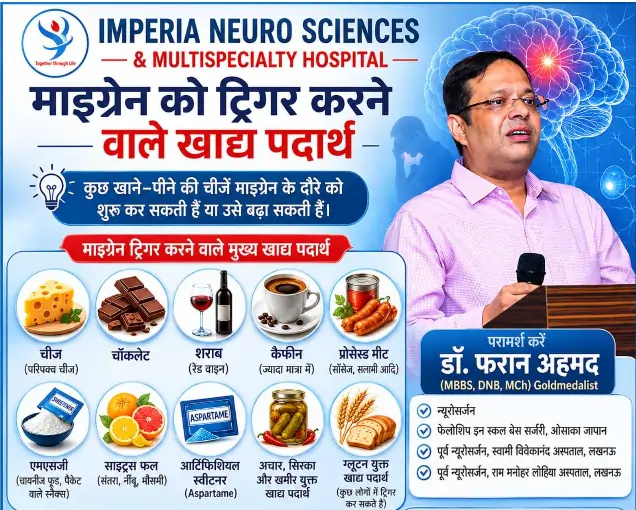
Food That Trigger Migraine
What is Food That Trigger Migraine?
Food that trigger migraine are specific foods and drinks that can activate severe headache attacks in sensitive individuals. These foods affect brain chemicals, blood flow, and nervous system activity, leading to migraine pain.
Understanding food that trigger migraine is important for preventing frequent migraine attacks.
⚠️ 7 Common Food That Trigger Migraine
🧀 1. Aged Cheese
Cheddar, parmesan, and blue cheese contain tyramine which can trigger migraine.
🍫 2. Chocolate
Chocolate contains caffeine and compounds that may stimulate migraine in sensitive people.
☕ 3. Caffeine (Tea & Coffee)
Both excess caffeine and caffeine withdrawal can cause migraine attacks.
🥓 4. Processed Meats
Sausages, bacon, and salami contain nitrates and preservatives that may trigger headache.
🍷 5. Alcohol
Red wine and other alcoholic drinks contain histamines and sulfites linked with migraine.
🥤 6. Artificial Sweeteners
Aspartame and other sweeteners may affect brain activity and trigger migraine.
🍜 7. Fast Food & MSG
Foods containing monosodium glutamate (MSG) are known migraine triggers for many people.
🧠 Why Do These Foods Trigger Migraine?
These foods can:
- Affect brain neurotransmitters (like serotonin)
- Change blood vessel activity
- Increase inflammation in the brain
- Cause chemical imbalance in sensitive individuals
🧘 How to Prevent Migraine Caused by Food
✔ Maintain a food diary
✔ Avoid processed foods
✔ Eat fresh home-cooked meals
✔ Stay hydrated
✔ Do not skip meals
✔ Identify personal trigger foods
🥗 1. Avoid Trigger Foods
Identify and avoid food that trigger migraine like:
- Aged cheese
- Chocolate
- Processed meats
- Alcohol
- MSG foods
- Caffeine overload
💧 2. Stay Hydrated
Dehydration is a major migraine trigger.
✔ Drink 8–10 glasses of water daily
✔ Avoid sugary and carbonated drinks
⏰ 3. Eat Regular Meals
Skipping meals can trigger migraine attacks.
✔ Eat on time
✔ Avoid long fasting periods
✔ Include balanced diet (protein + carbs + healthy fats)
😴 4. Maintain Proper Sleep Schedule
Irregular sleep is a strong trigger.
✔ Sleep 7–8 hours daily
✔ Sleep and wake at fixed time
✔ Avoid late-night screen usage
🧘 5. Manage Stress
Stress is one of the biggest migraine triggers.
✔ Practice meditation
✔ Try deep breathing exercises
✔ Do yoga or light exercise
📵 6. Reduce Screen Time
Too much screen exposure can strain the brain.
✔ Take breaks every 20–30 minutes
✔ Use blue light filter
✔ Avoid long mobile usage
🏃 7. Regular Exercise
Physical activity helps reduce migraine frequency.
✔ Walking
✔ Yoga
✔ Light cardio exercises
☕ 8. Control Caffeine Intake
Both excess and sudden withdrawal can trigger migraine.
✔ Limit tea/coffee
✔ Avoid sudden stopping
🧠 9. Track Your Migraine Triggers
Maintain a diary:
✔ Food intake
✔ Sleep pattern
✔ Stress level
✔ Headache timing
🏥 10. Consult a Doctor
If migraine is frequent:
✔ Visit a neurologist
✔ Get proper diagnosis
✔ Follow medical treatment plan
🏥 When to Visit a Doctor?
Consult a neurologist if:
- Migraine occurs frequently
- Pain is severe or long-lasting
- Medicines are not effective
- You have vision or neurological symptoms
👉 At Imperia Hospital, our neurology experts provide advanced migraine diagnosis and treatment.
https://pmc.ncbi.nlm.nih.gov/articles/PMC10607881/
🧬 Understanding Migraine and Its Food Connection
Migraine is not just a normal headache—it is a complex neurological condition that affects brain activity, nerves, and blood vessels. Many patients notice that certain foods can directly trigger or worsen their migraine attacks.
These are known as food that trigger migraine, and identifying them is a key step in long-term migraine management.
🔬 How Food Triggers Migraine in the Brain
When you consume certain foods, they can:
- Trigger release of brain chemicals like serotonin
- Cause dilation or constriction of blood vessels
- Increase inflammation in the nervous system
- Activate pain pathways in the brain
This leads to symptoms like:
- Severe headache
- Nausea or vomiting
- Sensitivity to light and sound
- Dizziness
📊 Food Sensitivity Varies From Person to Person
It is important to understand:
👉 Not all migraine patients react to same food
👉 Each person has a unique trigger pattern
👉 Food diary tracking is highly recommended
🧾 How to Identify Your Personal Migraine Trigger Foods
Follow this simple method:
✔ Write down everything you eat daily
✔ Note headache timing
✔ Identify repeating food patterns
✔ Eliminate one food group at a time
✔ Observe improvement
🧘 Lifestyle Tips to Reduce Migraine Along with Diet
Food is not the only factor. Combine diet control with:
✔ Regular sleep schedule
✔ Stress management
✔ Proper hydration
✔ Regular exercise
✔ Avoid skipping meals
🏥 Medical Treatment for Chronic Migraine
If migraine becomes frequent or severe, dietary changes alone are not enough.
At Imperia Hospital, neurologists offer:
- Advanced migraine diagnosis
- Preventive medications
- Neurological testing
- Personalized treatment plans
📈 Long-Term Prevention Strategy
To reduce migraine permanently:
✔ Avoid known food that trigger migraine
✔ Maintain healthy lifestyle habits
✔ Follow doctor’s treatment plan
✔ Track migraine frequency regularly
🧠 Final Conclusion
Understanding food that trigger migraine is one of the most effective ways to control migraine naturally. While medications help manage pain, avoiding trigger foods plays a crucial role in prevention.
If symptoms persist, consult a neurologist for expert care and proper diagnosis.
❓ FAQ – Food That Trigger Migraine
❓ Q1. What foods commonly trigger migraine attacks?
Common food that trigger migraine include aged cheese, chocolate, processed meats, alcohol (especially red wine), caffeine, and foods containing MSG or artificial sweeteners.
❓ Q2. Why do certain foods trigger migraine?
Certain foods affect brain chemicals, blood flow, and inflammation levels. This can activate pain pathways in the brain, leading to migraine attacks in sensitive individuals.
❓ Q3. Can avoiding trigger foods completely cure migraine?
Avoiding trigger foods cannot completely cure migraine, but it can significantly reduce the frequency and severity of attacks when combined with proper medical treatment.
❓ Q4. Is caffeine good or bad for migraine?
Caffeine can have both effects. Small amounts may reduce headache in some cases, but excess intake or sudden withdrawal can trigger migraine attacks.
❓ Q5. How can I identify my personal migraine trigger foods?
You can maintain a food diary, track your meals and headache timing, and eliminate suspected foods one by one to identify your personal triggers.
❓ Q6. Are all migraine patients affected by the same foods?
No, migraine triggers vary from person to person. What triggers migraine in one person may not affect another.
❓ Q7. Should I consult a doctor for food-related migraine?
Yes, if migraine is frequent or severe, you should consult a neurologist for proper diagnosis and personalized treatment.