
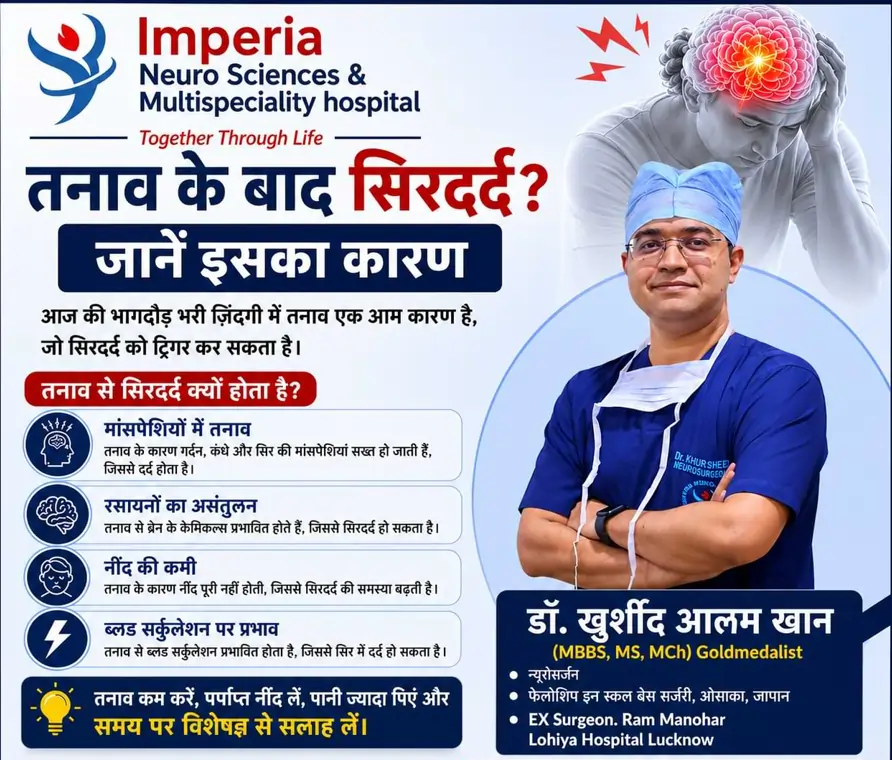
Headaches After Stress? Know the Real Reasons
Stress has become a part of modern life. Whether it is work pressure, family responsibilities, financial problems, lack of sleep, or emotional tension, stress affects both mental and physical health. One of the most common physical symptoms people experience is headaches after stress.
Many people notice that after a stressful day or emotional situation, they suddenly develop pain around the forehead, temples, neck, or entire head. Sometimes the headache feels mild and dull, while in other cases it becomes severe enough to affect daily activities.
Understanding why headaches happen after stress is important because repeated stress-related headaches can impact productivity, sleep, mood, and overall quality of life.
In this article, we will explain the causes of headaches after stress, common symptoms, different types of stress headaches, treatment options, prevention methods, and when you should consult a neurologist.
What Are Stress Headaches?
Stress headaches are headaches triggered by physical, emotional, or mental stress. They are most commonly known as tension headaches.
These headaches occur when muscles in the neck, shoulders, scalp, and jaw become tight due to stress and anxiety. Stress also affects hormones and brain chemicals, which can increase sensitivity to pain.
Stress headaches may occur:
- During stressful situations
- Immediately after stress
- After long working hours
- Due to emotional exhaustion
- Because of poor sleep caused by stress
Many people ignore these headaches initially, but frequent headaches may indicate chronic stress or an underlying neurological issue.
Why Do Headaches Happen After Stress?
There are several medical reasons behind headaches after stress.
1. Muscle Tension
When a person is stressed, muscles automatically tighten, especially around the neck and shoulders. This muscle tightness reduces blood flow and creates pressure around the head, leading to tension headaches.
Common signs include:
- Tight band-like pain around the head
- Neck stiffness
- Shoulder pain
- Pressure behind the eyes
2. Hormonal Changes
Stress triggers the release of stress hormones such as cortisol and adrenaline. High levels of these hormones can affect blood vessels and nerve activity in the brain, which may trigger headaches or migraines.
3. Lack of Sleep
Stress often causes poor sleep or insomnia. Lack of proper sleep increases the risk of headaches because the brain does not get enough rest and recovery time.
People who sleep less than 6 hours regularly are more likely to experience stress-related headaches.
4. Anxiety and Mental Fatigue
Continuous overthinking and anxiety overload the brain. Mental exhaustion can increase sensitivity to pain signals, making headaches more frequent and intense.
5. Dehydration and Poor Eating Habits
During stressful situations, many people:
- Skip meals
- Drink less water
- Consume excessive caffeine
- Eat unhealthy foods
These habits can contribute to headaches after stress.
Types of Headaches Caused by Stress
1. Tension Headache
This is the most common stress-related headache.
Symptoms:
- Dull aching pain
- Pressure around forehead
- Tightness around head
- Neck and shoulder tension
- Mild to moderate pain
Tension headaches usually do not cause nausea or vomiting.
2. Migraine Triggered by Stress
Stress is one of the biggest migraine triggers.
Symptoms:
- Severe throbbing pain
- Sensitivity to light and sound
- Nausea
- Blurred vision
- Pain on one side of the head
Some people experience migraines after the stressful event ends. This is called a “let-down migraine.”
3. Cervicogenic Headache
Stress-related muscle tightness in the neck may also cause cervicogenic headaches.
Symptoms:
- Neck pain
- Pain starting from back of the head
- Reduced neck movement
- Pain spreading to forehead or eyes
Common Symptoms of Headaches After Stress
Symptoms vary from person to person, but common signs include:
- Tightness around the head
- Pressure in temples
- Neck stiffness
- Shoulder pain
- Fatigue
- Difficulty concentrating
- Irritability
- Sensitivity to noise
- Mild dizziness
- Sleep disturbance
Some people may also feel emotional exhaustion along with headache symptoms.
How Stress Affects the Brain
Stress affects the nervous system directly. When the body remains under stress for long periods, the brain stays in “fight or flight” mode.
This can lead to:
- Increased inflammation
- Overactive pain pathways
- Poor sleep quality
- Reduced serotonin levels
- Muscle tension
- Anxiety disorders
Over time, chronic stress may worsen headaches and increase the risk of migraines.
Risk Factors for Stress Headaches
You may be more likely to develop headaches after stress if you:
- Work long hours
- Use screens continuously
- Sleep poorly
- Have anxiety or depression
- Skip meals frequently
- Drink excess caffeine
- Have poor posture
- Experience emotional trauma
- Do not manage stress properly
Women are generally more prone to stress-related headaches because hormonal changes can also contribute to migraine triggers.
How Are Stress Headaches Diagnosed?
Doctors usually diagnose stress headaches based on:
- Medical history
- Headache pattern
- Stress levels
- Symptoms
- Neurological examination
In some cases, tests may be required to rule out serious conditions.
These tests may include:
- MRI Brain
- CT Scan
- Blood tests
- Eye examination
You should never ignore frequent or severe headaches without medical evaluation.
Best Treatments for Headaches After Stress
1. Stress Management
Managing stress is the most important step in preventing headaches.
Helpful methods include:
- Deep breathing exercises
- Meditation
- Yoga
- Relaxation techniques
- Listening to calming music
- Spending time outdoors
2. Proper Sleep
Good sleep helps the brain recover.
Tips for better sleep:
- Sleep 7–8 hours daily
- Avoid mobile screens before bed
- Maintain fixed sleep timing
- Reduce caffeine intake at night
3. Stay Hydrated
Dehydration can worsen headaches.
Drink:
- 2–3 liters of water daily
- Fresh juices
- Coconut water
Avoid excessive caffeine and sugary drinks.
4. Regular Exercise
Exercise reduces stress hormones and improves blood circulation.
Best exercises include:
- Walking
- Yoga
- Stretching
- Cycling
- Light cardio
Even 30 minutes of exercise daily can reduce headache frequency.
5. Healthy Diet
Certain foods help maintain stable energy levels and reduce stress.
Include:
- Fruits
- Vegetables
- Nuts
- Whole grains
- Protein-rich foods
Avoid:
- Processed foods
- Excess caffeine
- Alcohol
- Skipping meals
6. Medications
Doctors may prescribe medications depending on headache severity.
These may include:
- Pain relievers
- Muscle relaxants
- Migraine medications
- Anti-anxiety medications
Avoid self-medication because frequent painkiller use can lead to rebound headaches.
Home Remedies for Stress Headaches
Some simple home remedies may help relieve symptoms:
- Apply cold or warm compress
- Rest in a quiet dark room
- Massage neck and shoulders
- Practice deep breathing
- Drink enough water
- Take short screen breaks
- Maintain proper posture
These methods can provide temporary relief for mild headaches.
When Should You See a Doctor?
You should consult a neurologist if:
- Headaches occur frequently
- Pain becomes severe
- Headaches disturb sleep
- You experience vomiting
- Vision becomes blurry
- Headaches worsen suddenly
- Painkillers stop working
- Headaches affect daily life
Early diagnosis can help identify underlying neurological conditions and prevent complications.
How to Prevent Stress Headaches
Preventing stress headaches requires lifestyle changes and stress control.
Prevention Tips:
- Manage workload properly
- Take breaks during work
- Avoid excessive screen time
- Sleep on time
- Exercise regularly
- Practice meditation
- Stay hydrated
- Eat balanced meals
- Maintain work-life balance
Consistency is important for long-term headache prevention.
Can Stress Headaches Become Dangerous?
Most stress headaches are not life-threatening, but chronic headaches should never be ignored.
Long-term unmanaged stress may increase the risk of:
- Chronic migraines
- Anxiety disorders
- Depression
- Sleep disorders
- High blood pressure
In rare cases, severe headaches may indicate serious neurological problems that require immediate medical attention.
Final Thoughts
Headaches after stress are extremely common, but they should not be ignored if they happen frequently or severely affect your daily life. Stress impacts the brain, muscles, hormones, and nervous system, which can trigger different types of headaches.
The good news is that proper stress management, healthy lifestyle habits, good sleep, hydration, exercise, and timely medical care can significantly reduce stress-related headaches.
If you or your loved ones are experiencing persistent headaches after stress, consulting a neurologist can help identify the exact cause and provide effective treatment.
For expert neurological consultation and headache treatment, visit Imperia Neuro Sciences & Multispeciality Hospital.
FAQ Section
Can stress alone cause headaches?
Yes, stress is one of the most common causes of tension headaches and migraines.
How long do stress headaches last?
Stress headaches may last from 30 minutes to several hours. Chronic stress headaches can continue for days.
Are stress headaches dangerous?
Most are not dangerous, but severe or frequent headaches should be evaluated by a doctor.
Can lack of sleep trigger stress headaches?
Yes, poor sleep significantly increases the risk of headaches caused by stress.
Which doctor should I consult for frequent headaches?
You should consult a neurologist for proper diagnosis and treatment of recurring headaches.