
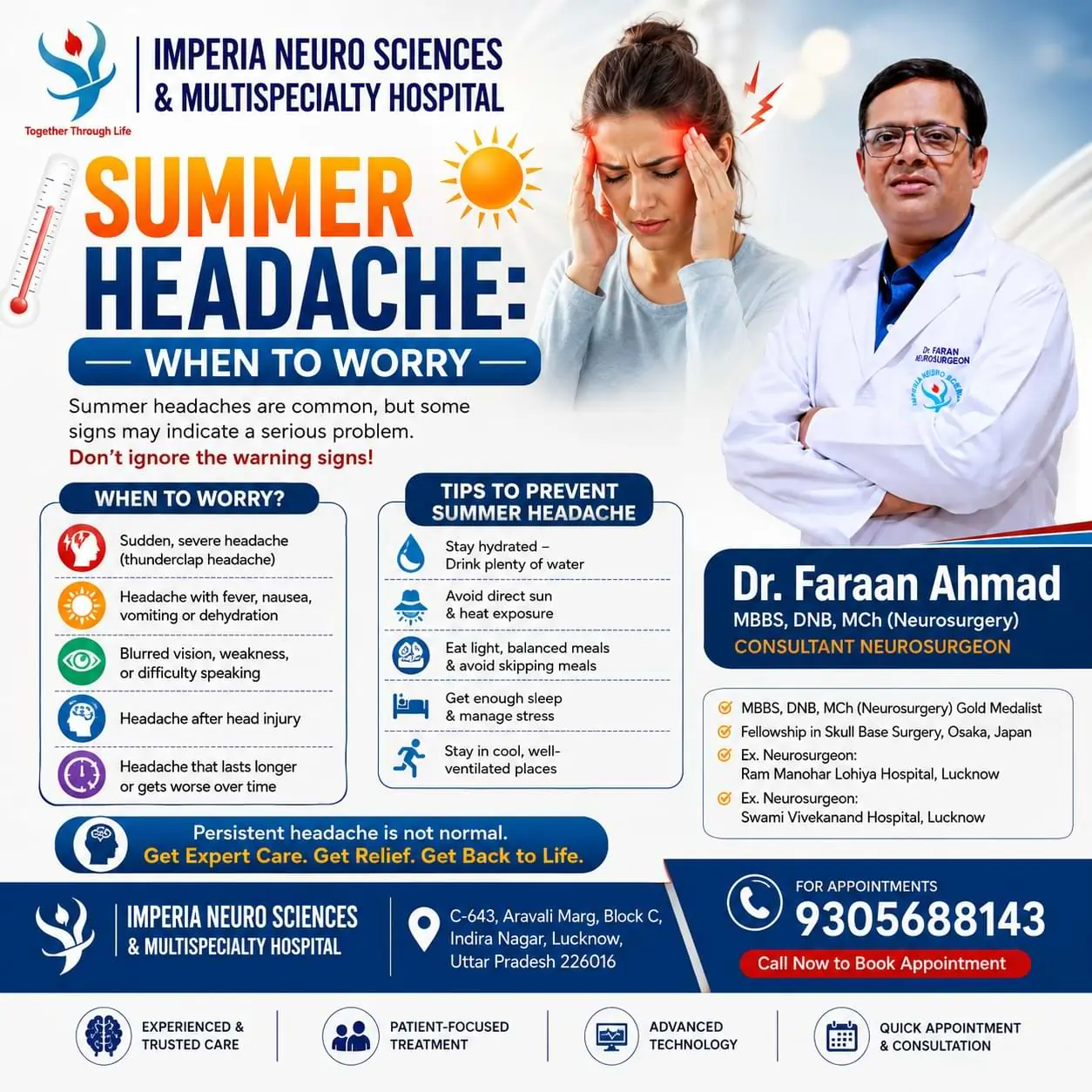
Why Headaches Increase During Summer
Headache During Summer: Causes, Symptoms & Prevention Tips
Summer brings longer days, rising temperatures, and increased outdoor activities. However, many people experience a common health problem during this season — headache during summer. Hot weather, dehydration, strong sunlight, and irregular routines can all contribute to frequent headaches and migraines.
While occasional headaches may not seem serious, repeated or severe headaches during hot weather should not be ignored. Understanding the causes, symptoms, and prevention methods can help you stay healthy and comfortable throughout the summer season.
Common Causes of Headache During Summer
Several environmental and lifestyle factors can trigger headache during summer. Some of the most common causes include:
1. Dehydration
Dehydration is one of the leading reasons behind summer headaches. During hot weather, the body loses fluids through sweating. If water intake is insufficient, the brain temporarily contracts due to fluid loss, causing headache pain.
Signs of dehydration include:
- Dry mouth
- Fatigue
- Dizziness
- Dark yellow urine
- Increased thirst
Drinking enough water throughout the day is essential to prevent dehydration-related headaches.
2. Heat Exposure
Spending long hours in direct sunlight or high temperatures may lead to heat exhaustion, which often causes headache during summer. Excessive heat affects the body’s ability to regulate temperature properly, increasing the risk of headaches.
People who work outdoors or travel frequently during daytime are more vulnerable.
3. Bright Sunlight and UV Rays
Strong sunlight can trigger migraines and severe headaches in sensitive individuals. Excessive exposure to UV rays may strain the eyes and increase discomfort.
Wearing sunglasses and avoiding prolonged sun exposure can help reduce headache triggers.
4. Skipping Meals
Irregular eating habits are another common cause of headache during summer. Many people eat less during hot weather, which can lower blood sugar levels and trigger headaches.
Healthy meals at regular intervals help maintain energy and reduce headache risk.
5. Poor Sleep Quality
Hot and humid nights can disturb sleep patterns. Lack of proper sleep is closely linked with headaches and migraines.
Adults should aim for at least 7–8 hours of quality sleep daily.
6. Excessive Caffeine and Sugary Drinks
Many people consume extra tea, coffee, cold drinks, or energy drinks during summer. Too much caffeine or sudden caffeine withdrawal can trigger headaches.
Sugary beverages may also contribute to dehydration.
Symptoms Associated with Headache During Summer
Symptoms may vary depending on the cause and severity of the headache.
Common symptoms include:
- Throbbing head pain
- Pressure around the forehead
- Sensitivity to light
- Nausea
- Dizziness
- Fatigue
- Eye strain
- Irritability
If headache is associated with confusion, fainting, fever, or vomiting, immediate medical attention may be required.
How to Prevent Headache During Summer
Preventing headache during summer mainly involves maintaining hydration and protecting the body from excessive heat.
Drink Plenty of Water
Water helps regulate body temperature and prevents dehydration. Adults should drink enough fluids throughout the day, especially while traveling or working outdoors.
Electrolyte-rich drinks such as coconut water and ORS can also be beneficial.
Avoid Direct Sunlight
Try to avoid outdoor activities during peak heat hours, usually between 12 PM and 4 PM.
Using umbrellas, caps, and sunglasses can reduce heat exposure.
Eat Healthy and Timely Meals
Fresh fruits, vegetables, and water-rich foods help maintain hydration and energy levels.
Avoid skipping meals for long periods.
Maintain Proper Sleep
A healthy sleep routine reduces stress and helps prevent headaches and migraines.
Sleeping in a cool and comfortable environment can improve sleep quality during summer.
Reduce Caffeine Intake
Limit excessive consumption of tea, coffee, and soft drinks. Choose healthier fluids such as water, lemon water, and fresh juices.
Foods and Drinks That Help Prevent Summer Headaches
Certain foods may help reduce the risk of headache during summer.
Helpful foods include:
- Watermelon
- Cucumber
- Coconut water
- Oranges
- Yogurt
- Leafy vegetables
These foods help maintain hydration and electrolyte balance.
When Should You Consult a Doctor?
Although many summer headaches are mild, some symptoms require medical evaluation.
Consult a doctor if:
- Headaches become frequent
- Pain is severe or sudden
- You experience vomiting or confusion
- Headache affects daily activities
- Medicines do not provide relief
Frequent headaches may require neurological evaluation to identify the underlying cause.
If you are experiencing persistent headaches, consulting a neurologist can help ensure proper diagnosis and treatment.
Final Thoughts
Headache during summer is a common issue caused by dehydration, heat exposure, sunlight, poor sleep, and irregular eating habits. Simple lifestyle changes such as drinking enough water, avoiding excessive heat, maintaining healthy meals, and getting proper rest can significantly reduce headache frequency.
Ignoring severe or recurring headaches may lead to complications. Early medical consultation can help identify the exact cause and provide effective treatment.
Frequently Asked Questions (FAQs)
Why does headache during summer happen?
Headache during summer commonly occurs due to dehydration, heat exposure, sunlight, and disturbed sleep patterns.
Can dehydration cause headache during summer?
Yes, dehydration is one of the most common causes of headache during summer.
How can I prevent headache during summer?
Drinking enough water, avoiding direct sunlight, eating healthy meals, and getting proper sleep can help prevent summer headaches.
Is headache during summer dangerous?
Most summer headaches are mild, but severe headaches associated with vomiting, fever, or confusion may require urgent medical attention.
When should I see a doctor for headache during summer?
You should consult a doctor if headaches become severe, frequent, or interfere with daily activities.